Abstract
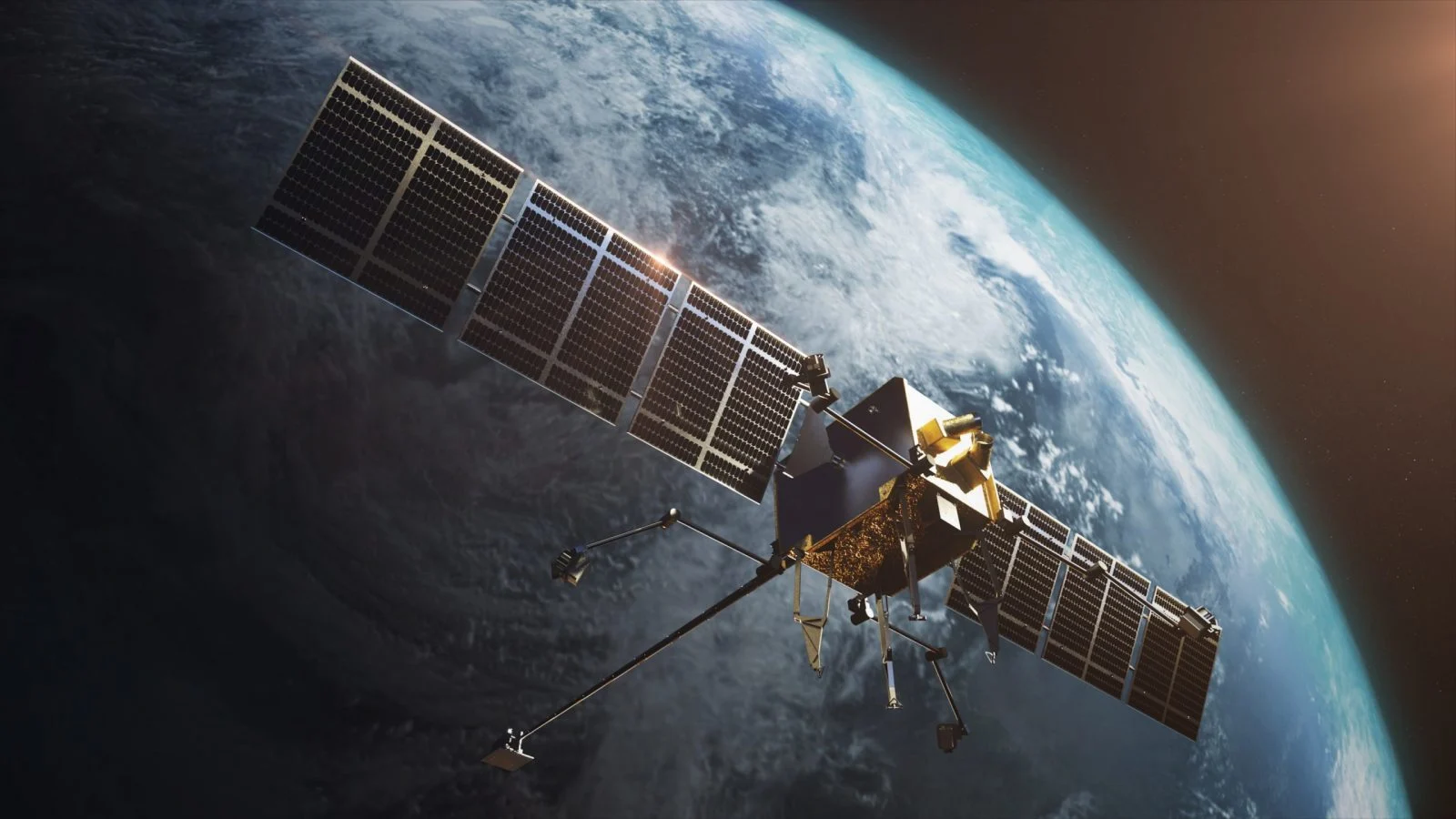
In 2024, Astroscale performed rendezvous with and proximity operations (RPO) around a derelict rocket body during the groundbreaking Active Debris Removal by Astroscale-Japan (ADRAS-J) mission. In the initial phases of the rendezvous, when the separation between the ADRAS-J Servicer (the active spacecraft) and the Client (the derelict object) was large (tens of kilometres or more), Astroscale used ground-based observations of the Client for navigation. Such ground-based Space Situational Awareness (SSA) systems can be limited by minimum resolving distances between closely separated objects or local weather conditions. To cope with such limitations, the Servicer carried a suite of RPO sensors, which were used to estimate the relative position and attitude of the Client. Such onboard sensors eliminate the impact of atmospheric weather conditions and enable the acquisition of resolved imagery of the Client. Depending on the design and communications capabilities of the ground and onboard systems, lower data latency and higher revisit rate can also be achieved when observing the Client directly from the Servicer. However, onboard sensors are also associated with drawbacks, such as additional mass and power consumption, and stringent lighting and spacecraft pointing constraints. These, in turn, tend to make the missions more expensive to launch and difficult to operate. It is clear, therefore, that an optimised combination of ground and onboard sensors could be found to maximise the performance and reduce the cost of RPO missions while ensuring their safe operations. To better understand the limits of ground-based optical tracking of RPO missions in low-earth orbit (LEO), Astroscale partnered with Slingshot Aerospace, who tracked both the Servicer and the Client using the Slingshot Global Sensor Network (SGSN) of ground-based electro-optical sensors. During this observation campaign, Slingshot used a combination of optical fences and gimbaled telescope systems, generating unresolved images and extracting observations on both objects. Using the observation data, Slingshot generated hundreds of position and velocity estimates (state vectors) on both objects. These observations were acquired while the Servicer approached the Client from a distance of several thousands of kilometres to within a few hundred metres, giving comprehensive coverage of different stages of the RPO mission. This paper reviews the achieved ground-based tracking frequency and accuracy compared to data from global navigation satellite system (GNSS) and RPO sensor-based orbit solutions of the two objects. Emphasis is placed on understanding the relative Servicer-Client distance threshold wherein the two objects can no longer be successfully distinguished using ground-based electro-optical systems, which is when onboard sensors become necessary. Based on this analysis, the relative advantages and disadvantages of onboard and ground-based sensors, for example, with regards to latency, accuracy, and revisit rate, are discussed. Recommendations are made on combining onboard and ground-based sensors needed to safely perform RPO activities. The advantages and disadvantages of staring array systems relative to gimbaled telescope systems for observing resident space objects in RPO conditions are discussed, and broader conclusions related to SSA and Space Domain Awareness are drawn.