Remove
Capture and deorbit inactive spacecrafts, ensuring a cleaner space environment.
Our solutions are powered by rendezvous and proximity operations — on‑orbit servicing solutions that extend mission life, enhance resilience, and remove orbital debris.
Astroscale is one of only a handful of commercial companies in the world to have proven Rendezvous, Proximity Operations and Docking (RPOD) capabilities in orbit. RPOD is the baseline for on-orbit servicing, and without those services, we cannot achieve a secure and sustainable future in space for the benefit of future generations.
RPOD is the foundation that makes it possible for one spacecraft to safely approach, inspect, interact with, and ultimately service or remove another satellite in space. Whether the mission involves refueling, life extension or end-of-life removal, RPOD is what makes these services possible.
Operating safely near another object in space is one of the most technically difficult challenges in the industry. Clients may be non-communicative or tumbling. Conditions change in seconds. There is no margin for error. Solving this reliably and repeatedly is what separates proven capability from promise.
Beyond powering individual missions, RPOD is the enabling technology behind a fundamental shift in how we use space. Satellites will no longer be single-use assets. They will be maintained, upgraded, repositioned and retired through routine on-orbit servicing. Astroscale is building the infrastructure to make that future possible.
SEE
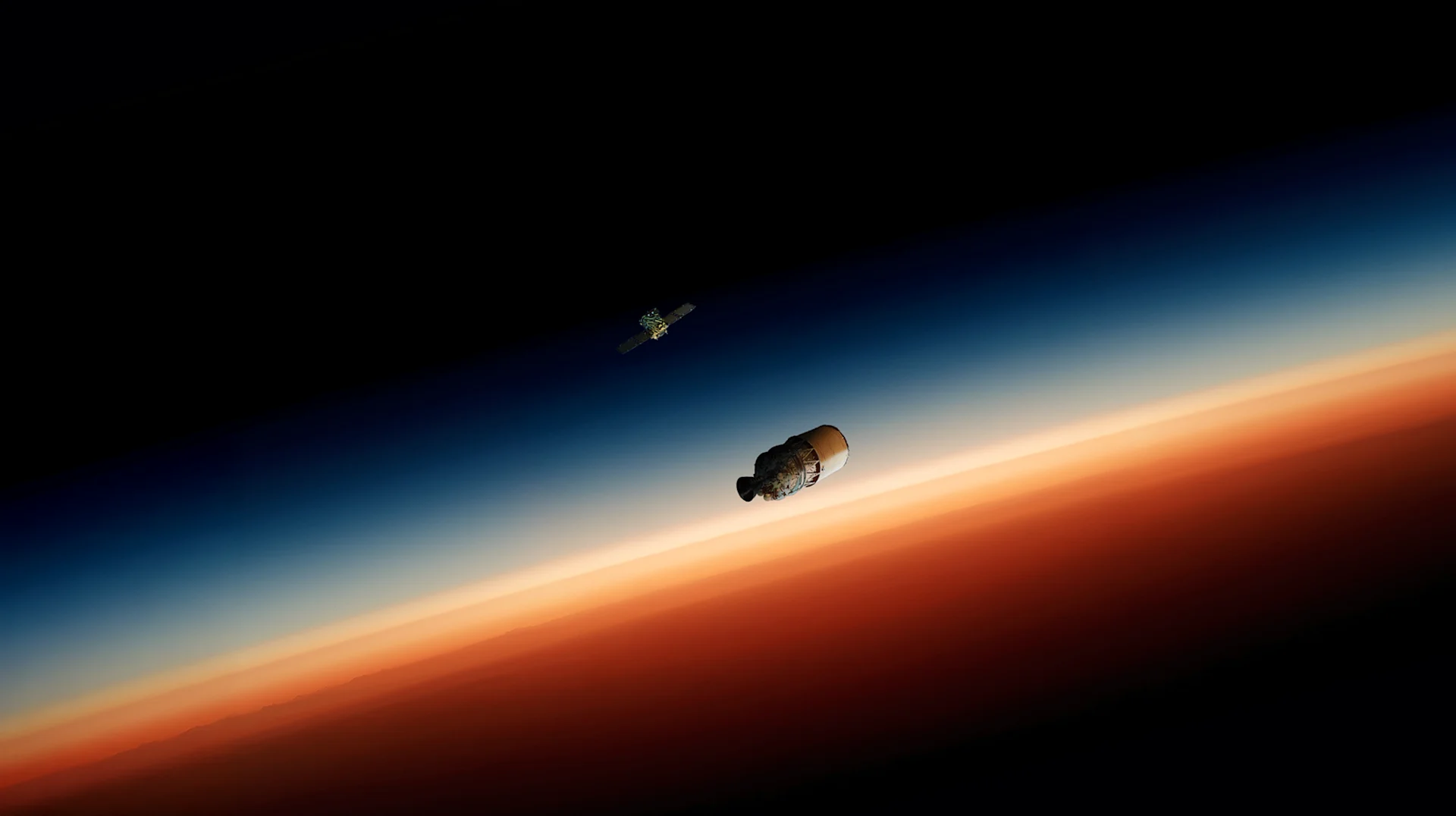
Detection and tracking
The ability to find, track and understand a client object from kilometers away down to the final few meters.
Knowing where your client is — and exactly how it is moving — is the first challenge of any RPOD mission. Astroscale spacecraft are equipped with a multi-sensor suite, combining visual cameras, infrared cameras, LiDAR and laser range finders, that enables the detection of clients from over 100 km away.
As the spacecraft closes in, these sensors work together to continuously refine our picture of the client’s position, motion and attitude. This layered approach means no single sensor failure compromises the mission and allows us to reliably track even uncooperative or tumbling objects.
Early client acquisition and robust situational awareness allows us to safely and confidently see the mission through.
THINK
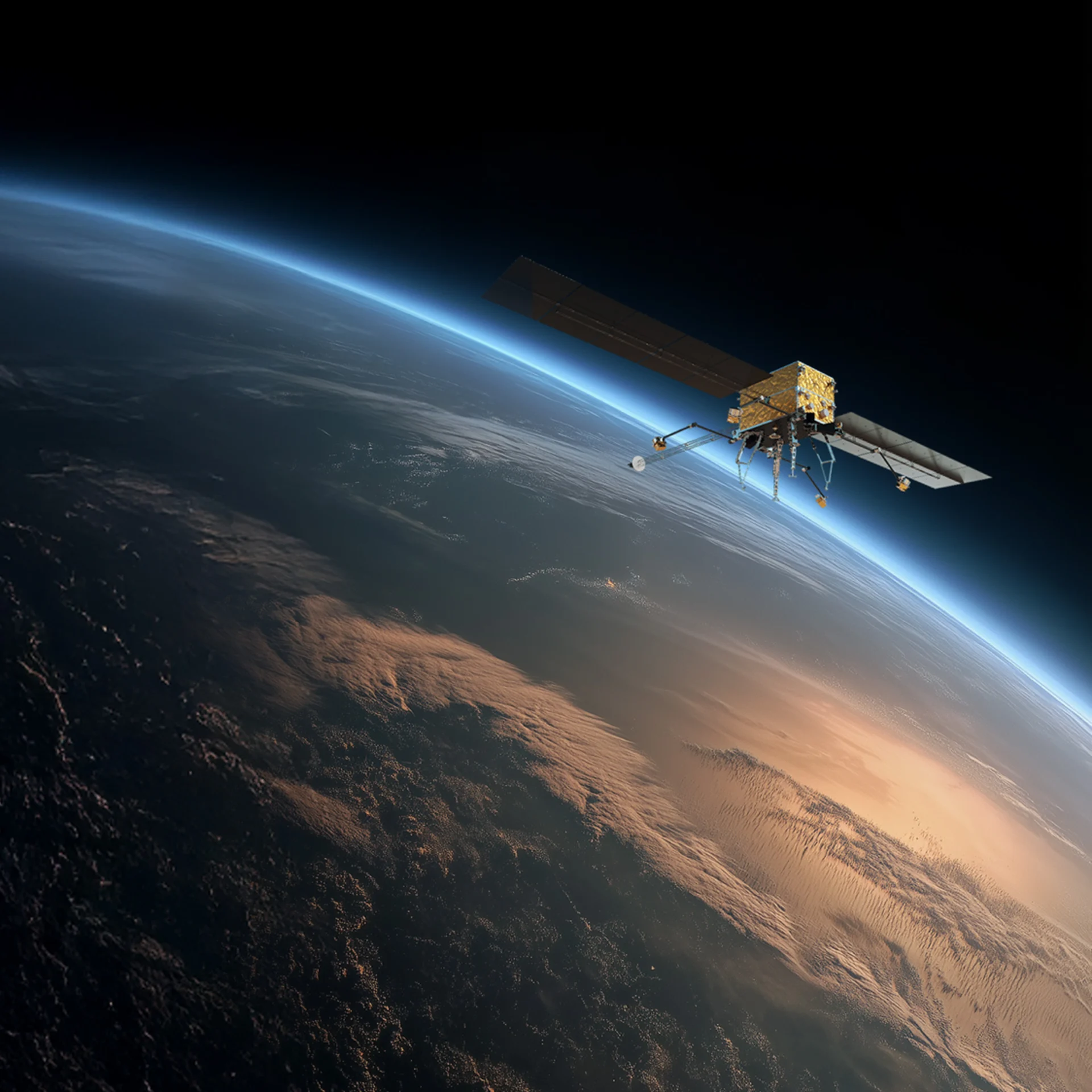
Onboard Intelligence
The ability to make smart, safe decisions in real time — without waiting for the ground.
At the speeds and distances involved in RPOD, waiting for instructions from the ground is not always an option. Each Astroscale spacecraft is powered by Guidance, Navigation and Control (GNC) algorithms that enable autonomous decision-making in orbit.
The spacecraft continuously assesses its environment, adapts its trajectory, responds to unexpected changes in the client’s motion, and executes controlled retreat maneuvers when needed. If conditions fall outside defined parameters, built-in safety logic kicks in automatically. Ground operators supervise progress through predefined checkpoints and authorize transitions between mission phases.
This means resilient and efficient operations that can handle the unexpected, while streamlining the process to minimize human touchpoints to only what is necessary.
ACT
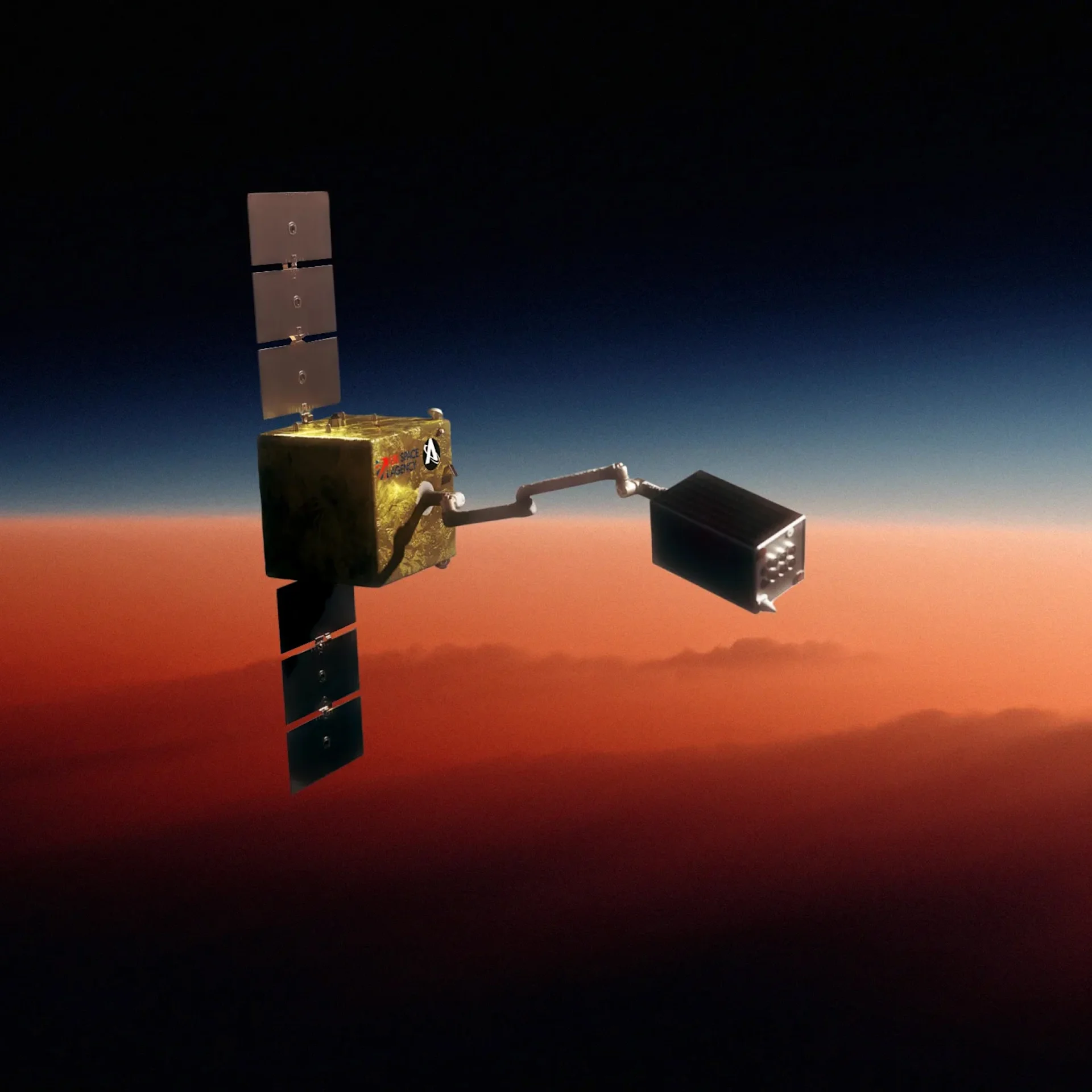
Precision maneuvering
The ability to move with exactness and control in the final, most critical phase of the mission.
Tracking a client and making accurate assessments only matters if the spacecraft can then move with the precision required to act on them. In proximity operations, small errors in position or timing can have serious consequences.
Astroscale spacecraft are engineered with propulsion systems, thrusters and reaction wheels that enable six-degrees-of-freedom — meaning the spacecraft can adjust its position and orientation in any direction simultaneously. This level of agility is what makes controlled, stable docking possible, and allows us to service a wide range of clients using different capture approaches depending on the mission.
This means the flexibility to operate across a range of mission types, and the precision to execute them safely every time.
FAQ
Detection & Tracking
Onboard Intelligence
Precision Maneuverability
General