Conference Paper
IAC 2022: Astroscale's Activities on Late collision Avoidance and the CREAM 2 Programme
Abstract
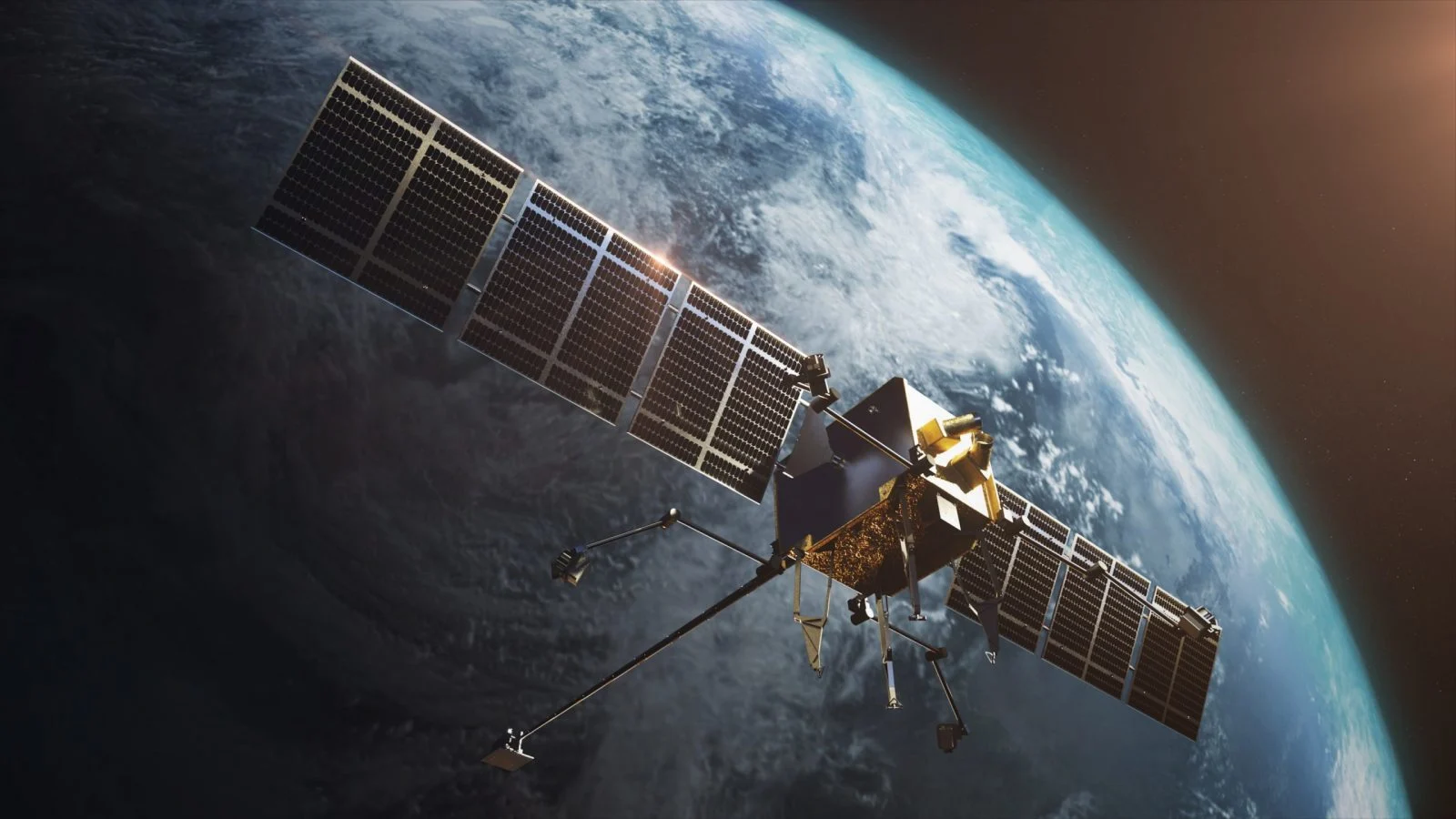
Currently there are more than 30,000 catalogued objects orbiting the Earth, most of which are non-functional satellites or micro space debris. This large amount of debris poses a threat to operational satellites because of risk of collision. This is reflected in the increase in collision avoidance operations performed by satellite operators, where the risk of collision is continuously monitored and when above thresholds, mitigation actions are executed. Satellite operators receive collision warnings up to 7 days ahead of an event in Low Earth Orbit (LEO) which are normally updated once or twice every day, depending on the orbit of the objects involved. Based on these collision warnings, satellite operators can monitor the risk of collision of their spacecraft. The preparation for a collision avoidance manoeuvre usually starts two to three days before the predicted time of closest approach (TCA). The minimum duration between the manoeuvre decision and TCA is driven by space-craft operational requirements and available uplink opportunities before the TCA. Satellites traditionally use a single ground station for their mission operations. It means that, using current processes, if a collision warning is received and a subsequent manoeuvre command is to be sent to the satellite, operators must wait for the satellite to be in visibility of the ground station. A late manoeuvre decision might thus not be able to be uplinked to the spacecraft in time in this scenario. The European Space Agency (ESA) CREAM 2 programme with Astroscale (prime), GMV and OneWeb aims to explore innovative ways to develop and test concepts for late commanding paths which allow for late decisions in collision avoidance – looking at different classes of satellite collision avoidance operations (including constellations). This paper will examine the trade-offs undertaken in this study which cross aspects such as ground segment to space segment autonomy and commanding pathways. Furthermore, the paper will examine Astroscale’s ELSA-M servicer, which would seem to be an ideal candidate to test some future collision avoidance concepts According to Euroconsult, there are plans to launch up to 17,000 constellation satellites by 2030. Astroscale launched its first in-orbit demonstrator ELSA-d in 2021 and plans for an array of ELSA-M services (our next generation servicer designed for multi-client remov-al) in the upcoming years. It is expected that Astroscale services will be operating in very busy orbital regimes, where efficient colli-sion avoidance strategies will be of importance. Astroscale will present its perspective on collision avoidance operations in this do-main.